
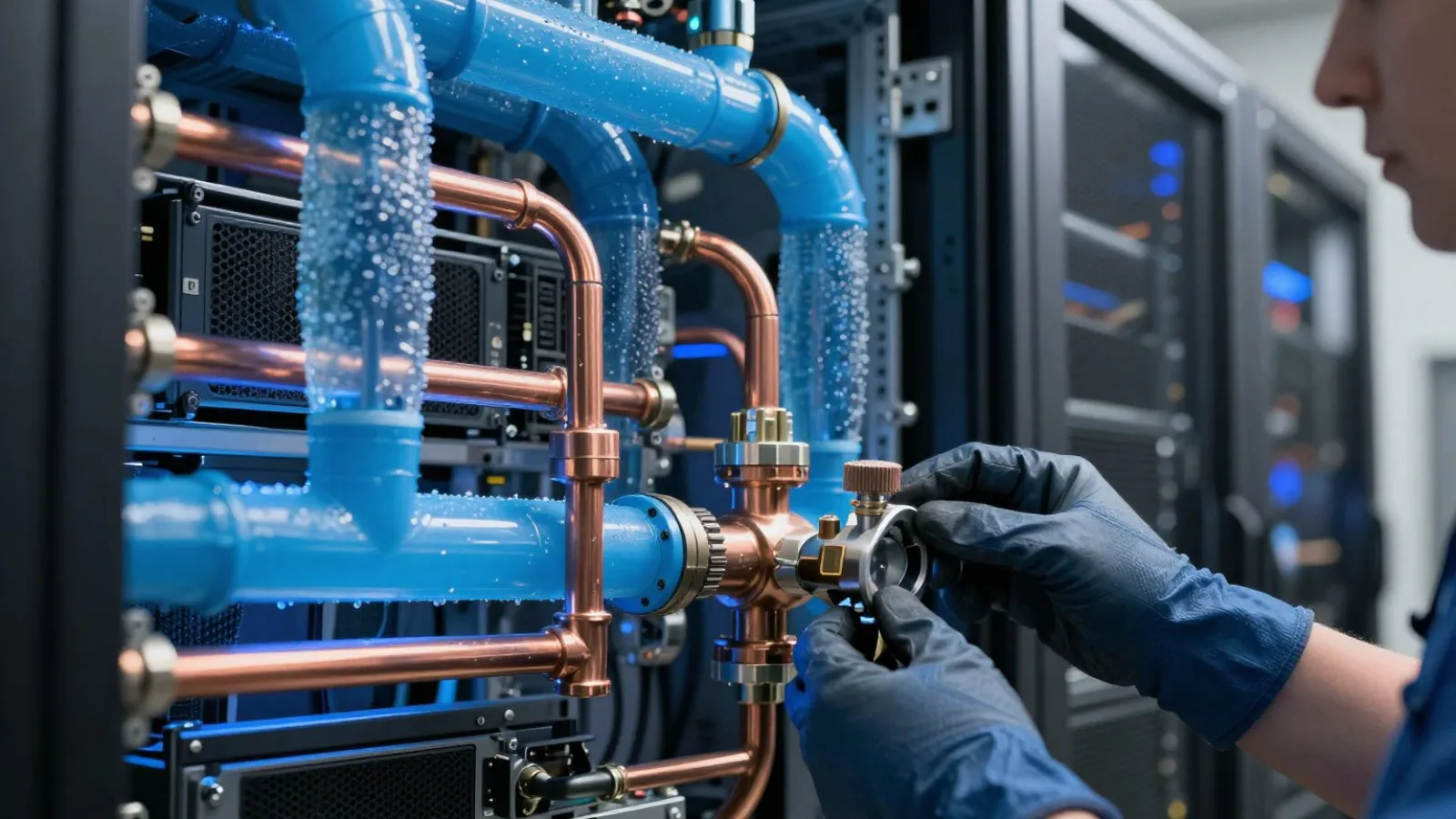
IEEE Spectrum outlines why hybrid air and liquid cooling reaches its limits above 250 kilowatts per rack. With a common 70/30 split, 75 kilowatts of heat still needs air cooling. Manufacturer CoolIT, an Ecolab company, presents systems that capture nearly all heat through liquid, enabling fanless server designs.
Above 250 kilowatts of rack power, the widely used combination of air and liquid cooling reaches its limits. With a typical split of 70 percent liquid to 30 percent air, that rack density still leaves 75 kilowatts of heat that must be removed by air. The effort needed to move that remaining heat load grows out of proportion to the gain. CoolIT, a subsidiary of Ecolab, presents systems that capture almost all heat through liquid and push the air share below one percent. Servers can then run entirely without fans, built from modular coldplate components the company says have been proven across six generations of server designs.
The underlying issue is rising thermal output from modern processors. In the past, cooling the chip alone was enough, with air handling the rest of the components. Today the heat spreads outward into memory, networking parts, storage drives, and power supplies as well. These components come in different shapes and have different temperature limits, which makes a single cooling approach harder to apply across the board. For operators running dense AI computing facilities, the choice of cooling technology now becomes a central factor in planning and procurement of new equipment.
The piece is a sponsored article from manufacturer CoolIT and mainly describes its own product line. It remains open how quickly full liquid cooling becomes standard practice and what retrofit costs existing data centers would face. Operators should assess at what power density switching from hybrid to full liquid cooling actually pays off.
What this means for decision-makers
- Assess whether hybrid cooling still works once new racks exceed 250 kilowatts of power.
- Ask vendors for the actual air share of their cooling system under full load.
- Calculate retrofit costs for existing facilities before committing to full liquid cooling.
This story was produced automatically from the source named above and checked by software before publication. The image is symbolic and shows neither the event nor a real person. How this paper is made