This area is prepared but not switched on. The newsroom, the calendar and the channel management exist and are in use. Automatic publishing to the platforms is built and tested, but deliberately not running yet. The figures below therefore describe the state the system is heading towards – not today's.
The numbers
What a managed social media operation costs
The numbers first, the reasoning after. They describe the target picture, not today's state.
See the breakdown – item by item
| What falls due in a year | With a social media agency | With this system |
|---|---|---|
| Retainer for five channels | €800 – 2,500 per month | none |
| A single post adapted for five channels | €80 – 250 per post | in house, about 20 minutes |
| Planning tool and calendar | €25 – 100 per month per seat | part of the editorial system |
| Reporting and monthly summary | €150 – 400 per report | figures come back automatically |
| Approval loops | email traffic, days to weeks | one step inside the system |
| Per year, at two posts a week | €9,600 – 30,000 | part of running the website |
Where these figures come from: Typical market rates for the German Mittelstand, deliberately set at the lower end – not quotes obtained for this purpose. Anyone paying more will find the gap larger, not smaller.
These figures describe a plan, not an operation. The newsroom exists and is in use; automatic publishing is prepared but not switched on. What is shown here is the calculation for the state the system is heading towards – expressly not for today's.
Starting point
Why social media usually runs on the side
Five channels with five sets of rules, looked after by someone whose actual job is something else. That is how it looks in most mid-sized companies – and how it looked here.
The problem is not time, it is scatter
- Topics in your head, dates in the calendar, copy in notes. None of it in one place. Anyone wanting to publish on Thursday spends Thursday searching first.
- Every channel has its own rules. Character limits, image formats, tone of voice. Posting the same text five times is convenient and reads exactly like that.
- Gaps only become visible afterwards. Without a calendar, a three-week silence goes unnoticed – except by the readers.
The answer was therefore not more discipline but an editorial process: one topic, five versions, one calendar, one approval.
State today
What already exists
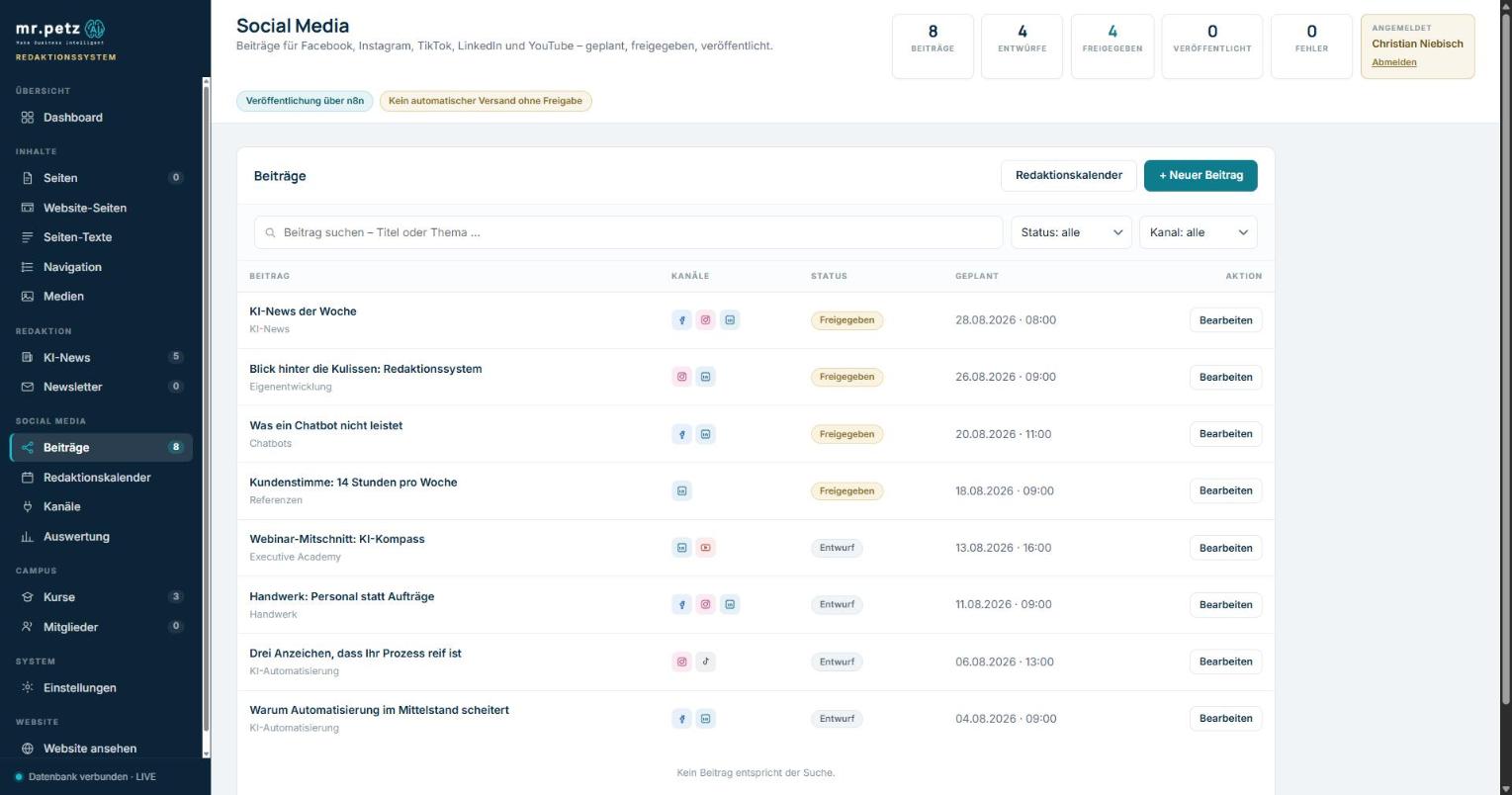
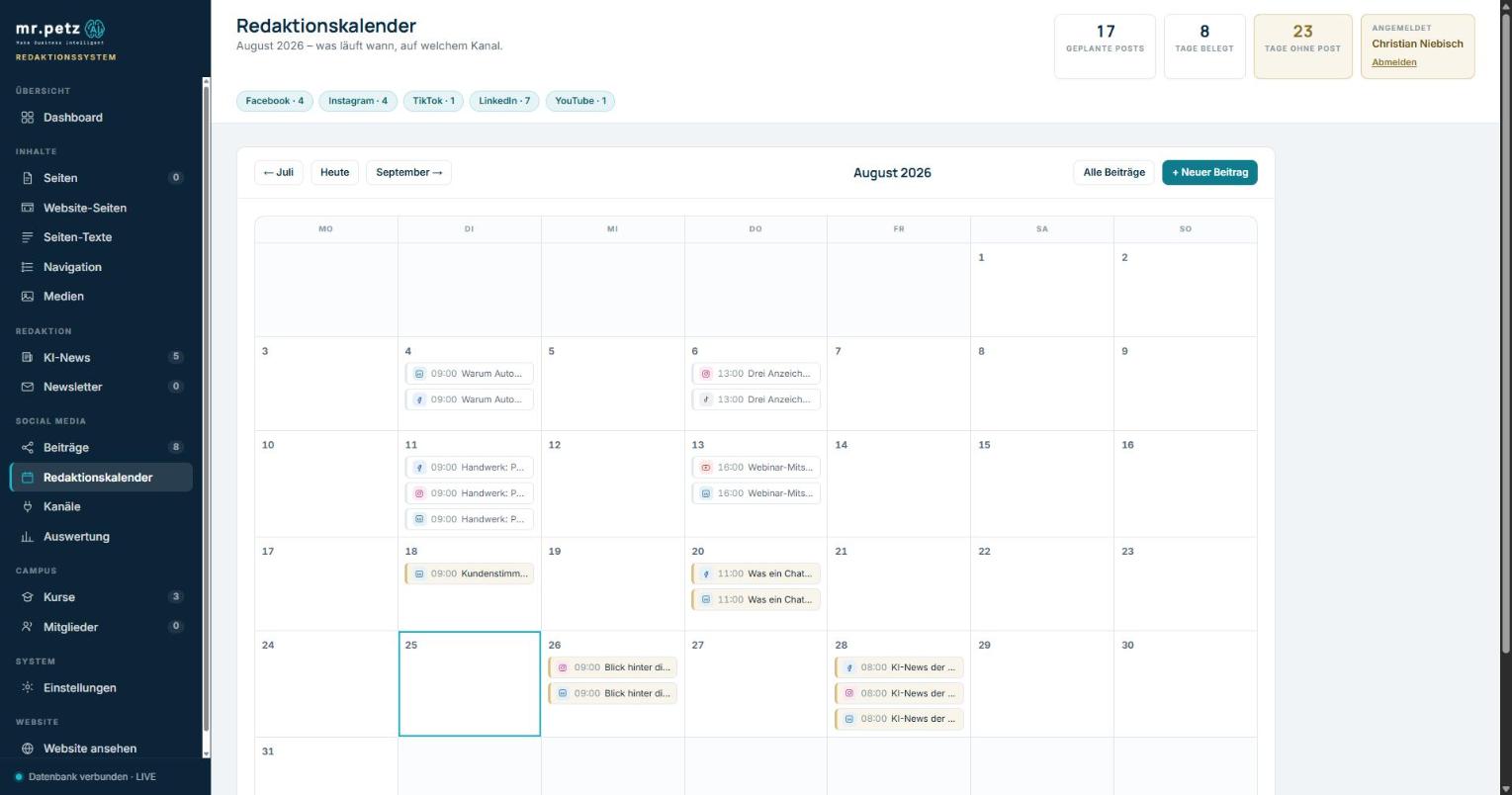
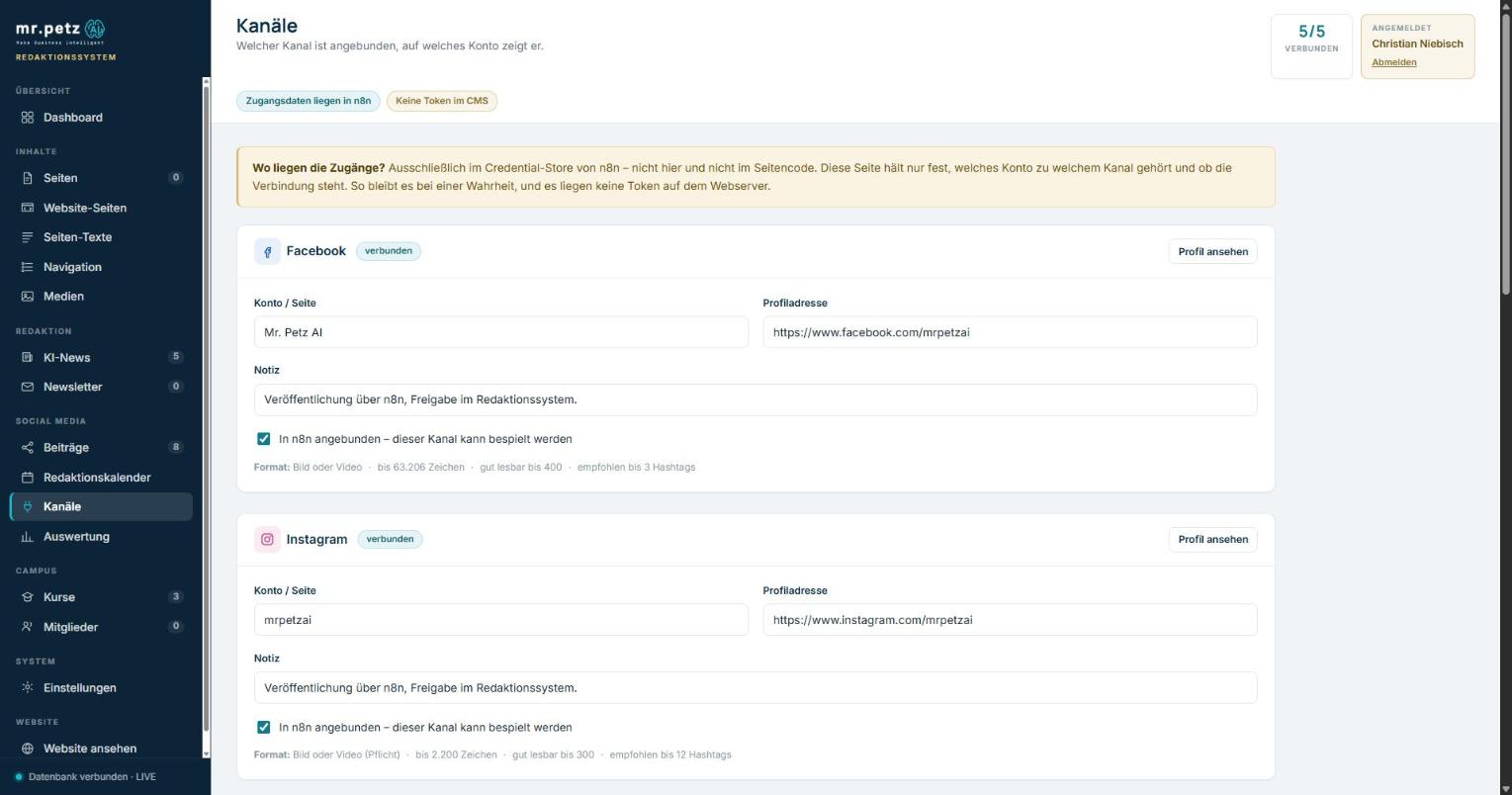
The newsroom, the calendar and the channel management are built and in use. The screens come from the running system; the content is sample data.
Where this is going
Three stages – one running, two intended
What is finished and what is intent are kept apart here. Anything else would be a brochure, not a reference.
Planning and approval
Social media as an editorial process rather than a side activity.
- One topic, five channel versions
- Character counter against real limits
- An editorial calendar with status
- Approval as a deliberate step
- Channel management without credentials on the web server
Automatic publishing
The interface exists. What is missing is the deliberate decision to switch it on.
- Released posts are made available, not pushed out
- The automation collects them at the scheduled time
- Outcome and engagement figures come back
- Each post keeps the time and address of the original
- A draft cannot go live by accident
The learning editorial plan
The loop closes: what worked shapes what gets planned.
- Topic suggestions from your own engagement
- Publishing times from your own figures
- Feedback from the CRM: which post led to a conversation
- A nudge about gaps in the calendar
- A quarterly report without manual assembly
Stage 3 has deliberately not been started. Stage 2 has to carry in daily use first and produce enough figures of its own – otherwise you automate assumptions instead of findings.
What it means
Why publishing is still switched off
The interface is built and tested. That it is not running is a decision, not an open building site.
- A system that publishes by itself forgives no mistake. A wrongly scheduled post can be withdrawn – after everyone has seen it. That asymmetry justifies caution.
- Process first, then automation. Automate an unfinished editorial process and you get faster mistakes. The order is the same as for any automation project in a company.
- Credentials do not sit on the web server. Not a single platform token lives where the website lives. If the web server is compromised, the accounts are not. That separation was settled before the first line of code.
What is interesting about this area is not what it can do. It is that it is deliberately not switched on yet. That restraint is exactly what a company expects from someone introducing automation.
Take it with you
This reference as a PDF
The figures, the build and the reasoning, laid out for A4 – without navigation, with contact details in the footer.